
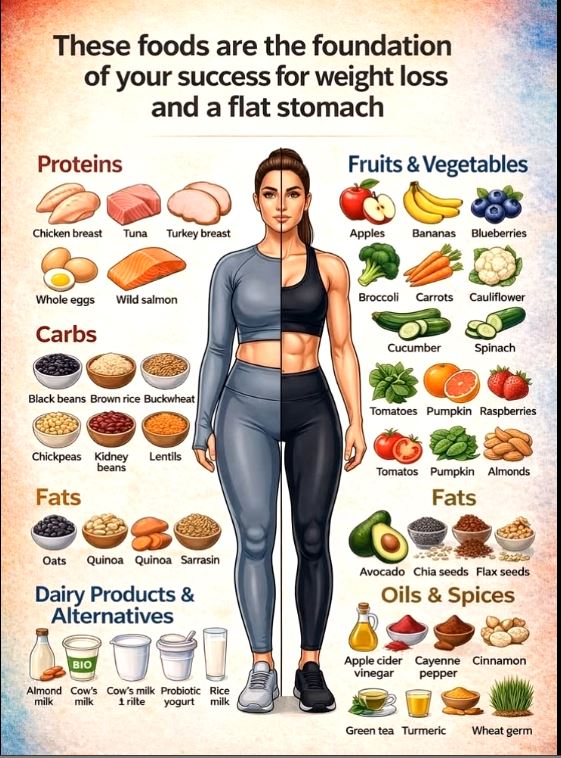
A varied eating pattern generally involves choosing foods from several different groups rather than relying heavily on a single ingredient or category. This visual organizes a broad selection of foods into proteins, carbohydrates, fruits and vegetables, fats, and dairy products or alternatives.
The protein section features foods such as chicken breast, turkey, tuna, eggs, and salmon. The carbohydrate section includes brown rice, buckwheat, chickpeas, beans, and lentils.
A substantial portion of the guide is dedicated to fruits and vegetables, including apples, bananas, blueberries, raspberries, broccoli, carrots, cauliflower, cucumber, spinach, and tomatoes.
Several sources of dietary fat are also represented, including avocado, chia seeds, flax seeds, and nuts. Dairy and alternative options shown in the visual include milk, yogurt, almond milk, and rice milk.
The image presents these foods in the context of weight loss and achieving a flatter stomach. However, it is important to recognize that individual foods do not independently guarantee weight loss or targeted abdominal fat reduction. Body-weight management depends on the overall dietary pattern, energy intake and expenditure, physical activity, and individual factors.
For that reason, this infographic is better viewed as general inspiration for food variety and balanced meal planning rather than as a prescriptive weight-loss diet. Anyone seeking an individualized diet or weight-management program should consider guidance from a qualified dietitian or healthcare professional.